
2025. 8. 27. 08:00ㆍHow to Cook Korean Food

Among the many seasoned vegetable side dishes (namul) in Korean cuisine, one of the most intriguing and traditional is Doraji Muchim (도라지무침) — spicy bellflower root salad.
It’s crisp, earthy, slightly bitter, and full of bold seasoning from gochugaru, garlic, sesame oil, and vinegar.
Doraji Muchim is one of those dishes you’ll often find on a traditional Korean table, especially during holidays like Chuseok or Lunar New Year, but it’s also a common banchan in everyday meals.
Despite its rustic roots, it offers complex textures and flavors that make it feel elegant and satisfying.
If you’re new to Korean cuisine, this might be the side dish that surprises you the most — in the best way.
🌿 What is Doraji?
Doraji (도라지) is bellflower root, known for its slightly bitter, grassy flavor and satisfying crunch.
In Korea, it’s not only a culinary ingredient but also used in herbal remedies for respiratory health and detox.
Before using, the root is usually soaked and rubbed in salt to remove its strong bitterness — a step that’s key to getting the right flavor and texture.
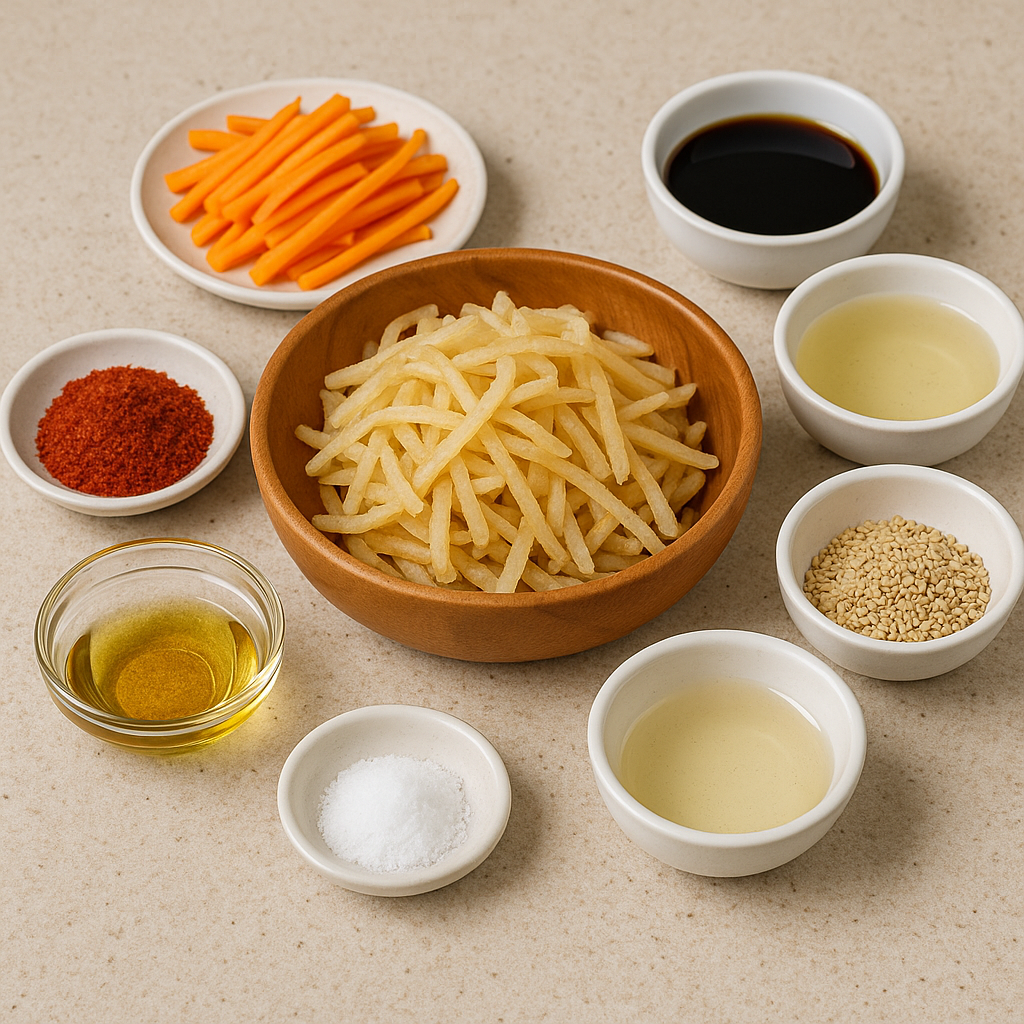
🛒 Ingredients (Serves 2–3)
- 100g dried or fresh bellflower root (doraji), julienned
- 1/2 tsp salt (for rubbing)
- 1 tbsp gochugaru (Korean red chili flakes)
- 1 tbsp soy sauce
- 1 tbsp rice vinegar
- 1/2 tbsp sesame oil
- 1/2 tbsp sugar
- 1 tsp minced garlic
- 1 tsp toasted sesame seeds
- Optional: thinly sliced carrot or onion for color and balance
👩🍳 Instructions
- Prep the doraji
If using dried bellflower root, soak it in water for 2–3 hours until fully rehydrated. If using fresh, rinse and drain.
Sprinkle the doraji with 1/2 tsp salt and rub it thoroughly with your hands for 2–3 minutes.
Let it rest for 10 minutes, then rinse well under cold water and drain.
This removes the strong bitterness and softens the texture. - Boil briefly (optional)
For milder taste and texture, you can blanch the doraji in boiling water for 30 seconds, then rinse under cold water and drain. - Season
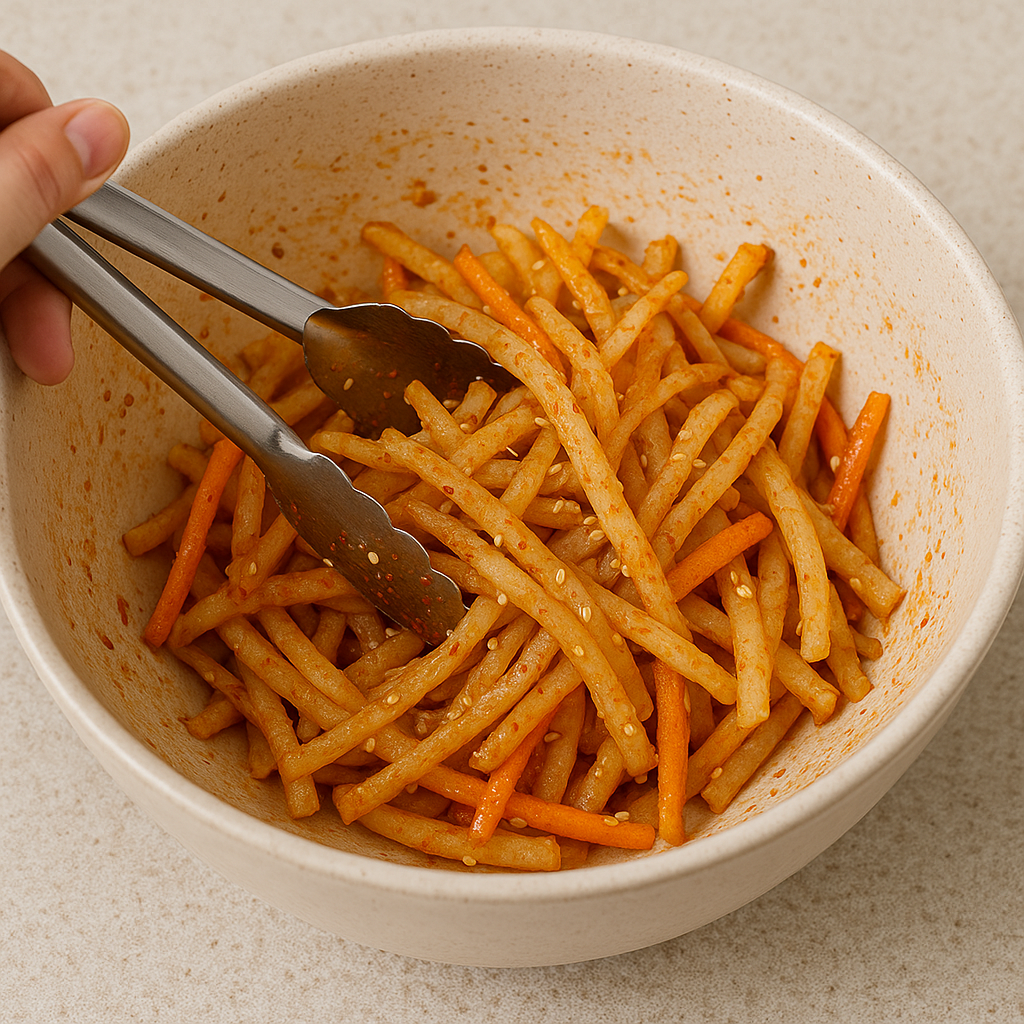
In a mixing bowl, combine doraji with gochugaru, soy sauce, vinegar, sesame oil, sugar, garlic, and sesame seeds.
Toss gently by hand or with tongs until evenly coated. - Rest and serve
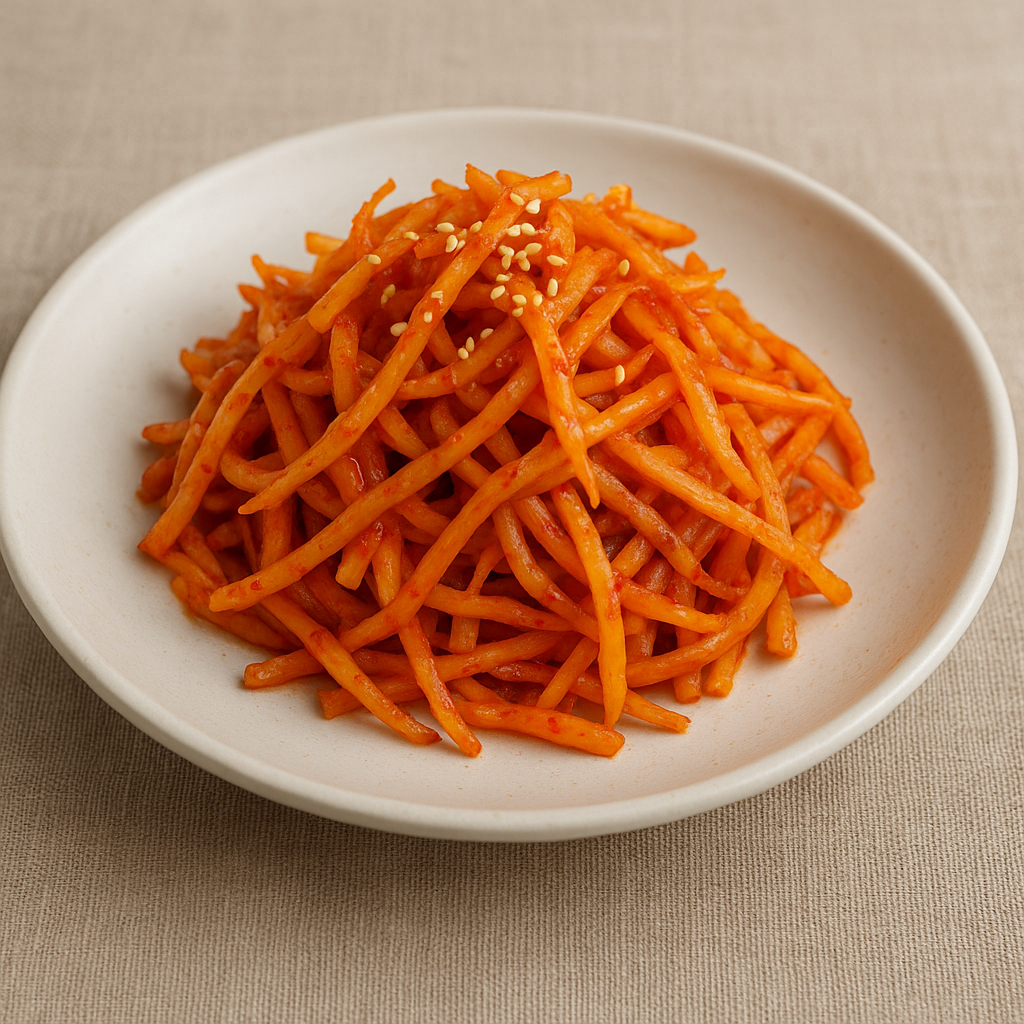
Let it sit for 5–10 minutes to absorb flavors. Garnish with a few more sesame seeds and serve cold or at room temperature.
❄️ Storage
- Keep in an airtight container in the refrigerator for up to 2–3 days
- Flavor deepens after a few hours but texture is best on day one
🔄 Variations
- Add julienned carrots for sweetness and color
- Skip vinegar and gochugaru for a non-spicy, soy-sesame version
- Use perilla oil (들기름) instead of sesame oil for a nutty variation
- Mix in a bit of cheongyang chili if you love it fiery
🍽 Best Pairings
- White rice and doenjang jjigae (soybean paste stew)
- Grilled fish or meat
- As part of a Korean holiday meal spread
- In a vegetarian bibimbap bowl
- With kimchi, egg rolls, or other namul dishes
Doraji Muchim may be unfamiliar to many, but once you try it, it quickly becomes a favorite for its crunchy texture, tangy seasoning, and herbal kick.
It’s a great way to explore traditional Korean flavors and add a little unexpected brightness to your meals.